
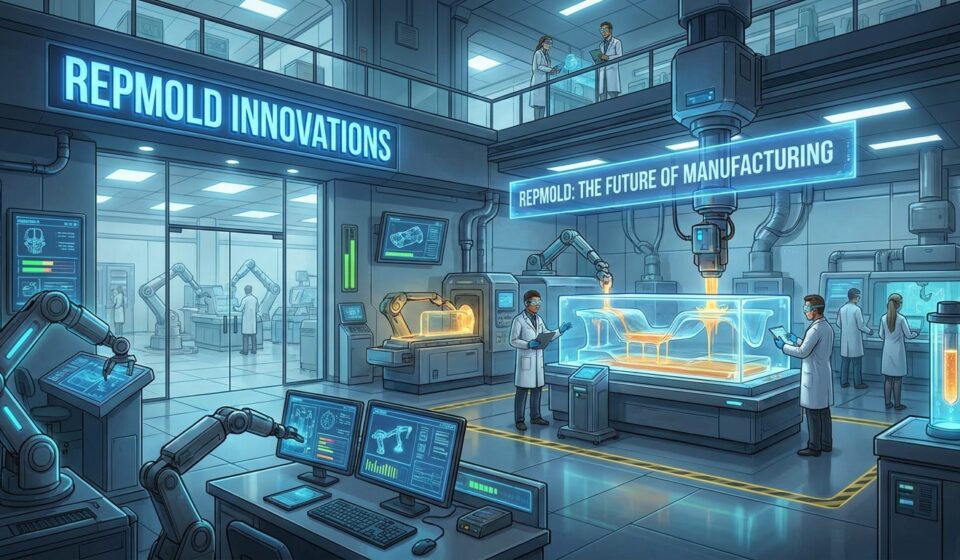
Repmold: Understanding Its Role in Modern Manufacturing and Industrial Innovation

Table of Contents
ToggleRepmold is an emerging term increasingly associated with manufacturing innovation, precision production, and advanced molding processes. As industries continue evolving toward automation, customization, and efficiency, concepts like Repmold are gaining attention for their potential to improve productivity and streamline manufacturing operations.
Modern manufacturing relies heavily on precision-based systems capable of producing high-quality components at scale. Whether in plastics, automotive engineering, construction materials, electronics, or industrial design, molding technologies remain essential to efficient production. Repmold appears connected to this growing ecosystem of modern fabrication methods and production refinement.
The increasing interest in Repmold reflects a larger industrial transformation where speed, consistency, sustainability, and cost efficiency have become critical priorities. Businesses are continuously seeking methods that reduce waste while improving product quality and operational flexibility.
The Meaning Behind Repmold
Although Repmold is still developing as a recognized industrial term, it can be understood as a concept linked to replication-based molding systems or advanced mold reproduction technologies. The name itself suggests a combination of “replication” and “mold,” indicating processes focused on reproducing precise shapes, structures, or industrial components.
In manufacturing, molds are essential tools used to create consistent products repeatedly. Repmold may refer to technologies or systems that improve how molds are developed, duplicated, maintained, or optimized for modern production environments.
This concept aligns with broader industrial goals such as:
- Precision manufacturing
- Faster production cycles
- Material efficiency
- Reduced manufacturing defects
- Scalable production systems
As industries increasingly embrace automation and digital fabrication, Repmold-type technologies may become more important across global manufacturing sectors.
The Evolution of Molding Technology
To understand the significance of Repmold, it is important to examine how molding technologies have evolved over time.
Traditional molding processes have existed for centuries in various forms, from metal casting to ceramic shaping. However, industrial revolutions transformed molding into highly sophisticated production systems capable of mass manufacturing complex products.
Modern molding techniques include:
- Injection molding
- Compression molding
- Blow molding
- Rotational molding
- Thermoforming
- Die casting
These methods allow manufacturers to produce highly detailed and consistent products across multiple industries.
The development of digital design software, robotics, and computer-controlled manufacturing systems has further advanced molding precision. Repmold may represent part of this next-generation evolution focused on improving replication accuracy and manufacturing adaptability.
How Repmold Fits Into Modern Manufacturing
Modern industries demand faster production without compromising quality. Repmold appears aligned with manufacturing systems designed to optimize this balance.
In industrial environments, mold-related technologies influence:
- Production speed
- Product consistency
- Material utilization
- Equipment efficiency
- Manufacturing scalability
Repmold could involve advanced processes that simplify mold duplication, improve production repeatability, or enhance mold durability in high-volume manufacturing environments.
As production demands grow globally, manufacturers increasingly rely on systems capable of maintaining quality while reducing operational costs. This need continues driving innovation in molding technologies.
Repmold and Precision Engineering
Precision engineering has become one of the defining characteristics of modern industrial production. Products today often require microscopic accuracy and highly detailed specifications.
Industries such as:
- Aerospace
- Medical devices
- Automotive manufacturing
- Consumer electronics
- Industrial robotics
all depend heavily on precision-produced components.
Repmold-related systems may contribute to these industries by supporting:
- Consistent shape reproduction
- Tight dimensional tolerances
- Reliable component replication
- Reduced production variability
In highly technical industries, even minor inconsistencies can create significant operational issues. Precision molding technologies therefore remain essential for maintaining quality standards.
Applications of Repmold Across Industries
The potential applications of Repmold span multiple sectors due to the widespread use of molding technologies in modern production systems.
Automotive Manufacturing
Automotive companies rely extensively on molded components for:
- Dashboard systems
- Interior panels
- Engine components
- Plastic housings
- Lighting assemblies
Repmold technologies may help improve consistency and reduce production waste in vehicle manufacturing.
Medical Industry
Medical manufacturing demands extremely high precision and safety standards. Molding systems are commonly used for:
- Syringes
- Surgical equipment
- Diagnostic devices
- Protective medical gear
Advanced replication systems can improve manufacturing reliability in healthcare-related production.
Consumer Electronics
Electronics manufacturers require highly detailed components with precise dimensions. Repmold may support:
- Smartphone casings
- Connectors
- Keyboard components
- Device enclosures
The increasing miniaturization of technology products makes accurate molding processes even more critical.
Construction and Infrastructure
Construction industries also use molding systems for:
- Pipes and fittings
- Structural components
- Insulation products
- Decorative architectural elements
Efficient mold replication systems can help support large-scale infrastructure projects.
The Importance of Efficiency in Manufacturing
One of the major goals of modern manufacturing is maximizing efficiency. Repmold appears relevant in this context because improved mold systems directly affect:
- Production output
- Operational speed
- Resource management
- Product consistency
Manufacturers increasingly seek technologies that reduce downtime and minimize material waste.
Efficient molding systems provide several advantages:
- Faster production cycles
- Lower labor costs
- Improved scalability
- Better quality control
As global competition intensifies, businesses that optimize production efficiency often gain stronger market advantages.
Repmold and Sustainability
Sustainability has become a major priority in industrial manufacturing. Companies face increasing pressure to reduce environmental impact while maintaining profitability.
Molding innovations connected to Repmold may support sustainability goals through:
- Material waste reduction
- Energy-efficient production
- Longer-lasting molds
- Improved recycling compatibility
Modern manufacturing increasingly focuses on circular production models where materials are reused and waste is minimized.
Reducing defective production is also important for sustainability because fewer rejected products mean lower resource consumption and reduced environmental strain.
Digital Transformation and Repmold
Digital technology has revolutionized industrial manufacturing. Advanced software systems now control many production processes with extraordinary precision.
Repmold may integrate with:
- Computer-aided design (CAD)
- Computer-aided manufacturing (CAM)
- Artificial intelligence systems
- Industrial automation platforms
- Smart factory technologies
Digital integration allows manufacturers to:
- Simulate production before manufacturing
- Detect potential defects early
- Optimize production parameters
- Improve quality control
The combination of digital systems and advanced molding technologies continues reshaping global manufacturing standards.
The Role of Automation
Automation is another major factor influencing modern industrial production.
Automated manufacturing systems improve:
- Speed
- Accuracy
- Safety
- Scalability
Repmold-related technologies may benefit significantly from robotic integration and automated quality monitoring systems.
In smart factories, automated molding systems can:
- Operate continuously
- Reduce human error
- Improve consistency
- Increase production capacity
As labor shortages and operational costs continue affecting industries worldwide, automation becomes increasingly valuable.
Challenges Facing Modern Molding Systems
Despite technological advancements, molding industries still face several challenges.
Rising Material Costs
Raw material prices continue fluctuating globally, affecting production costs and manufacturing profitability.
Equipment Maintenance
Molds experience wear over time, especially in high-volume manufacturing environments. Maintaining precision becomes increasingly difficult as molds degrade.
Technological Complexity
Advanced manufacturing systems often require specialized training and technical expertise.
Environmental Regulations
Manufacturers must comply with stricter environmental standards regarding emissions, waste management, and energy consumption.
Repmold technologies may help address some of these challenges by improving durability, efficiency, and process optimization.
Repmold and Product Customization
Consumer demand for personalized products has increased significantly in recent years. Modern customers often expect products tailored to specific preferences or market needs.
Flexible molding technologies help manufacturers produce:
- Limited production runs
- Custom product variations
- Rapid prototypes
- Specialized industrial components
Repmold systems may support more adaptable manufacturing environments capable of responding quickly to changing market demands.
Customization is becoming increasingly important in sectors such as:
- Healthcare
- Automotive design
- Consumer products
- Electronics
The Future of Repmold Technology
The future of Repmold likely involves greater integration with emerging industrial technologies.
Potential future developments may include:
- AI-driven mold optimization
- Real-time production analytics
- Self-monitoring manufacturing systems
- Advanced 3D-printed molds
- Sustainable material integration
As Industry 4.0 continues evolving, manufacturing systems will become increasingly interconnected and data-driven.
Artificial intelligence may eventually predict mold wear, optimize production efficiency automatically, and reduce manufacturing defects before they occur.
Why Repmold Matters in Modern Industry
Repmold matters because modern industries increasingly depend on precision, scalability, and efficiency. Manufacturing systems capable of improving these areas become highly valuable in competitive global markets.
The concept represents broader industrial trends including:
- Smart manufacturing
- Digital transformation
- Sustainable production
- Precision engineering
- Industrial automation
Businesses that adopt advanced molding technologies often improve both productivity and product quality simultaneously.
As manufacturing becomes more technologically advanced, systems related to Repmold may play an increasingly important role in shaping future industrial standards.
Economic Impact of Advanced Manufacturing Systems
Manufacturing remains one of the most important sectors in the global economy. Efficient production systems directly affect:
- Employment
- International trade
- Product affordability
- Technological innovation
Advanced molding technologies help industries maintain competitiveness in rapidly evolving markets.
Countries investing heavily in industrial innovation often experience:
- Stronger economic growth
- Increased exports
- Expanded technological leadership
Repmold-related systems may contribute to this broader economic transformation by supporting more advanced production capabilities.
Repmold and Innovation Culture
Innovation is now central to industrial success. Companies that continuously improve manufacturing systems tend to remain more competitive over time.
Repmold reflects this innovation-driven mindset where businesses seek:
- Better performance
- Reduced costs
- Higher quality standards
- Faster adaptation to market changes
The ability to innovate production processes often determines long-term success in modern industrial sectors.
Conclusion
Repmold represents an evolving concept connected to modern molding systems, precision manufacturing, and industrial innovation. As industries continue prioritizing efficiency, automation, sustainability, and scalability, technologies related to mold replication and advanced production processes are becoming increasingly important.
From automotive engineering and healthcare manufacturing to electronics and infrastructure development, advanced molding systems influence countless aspects of modern life. Repmold reflects the growing demand for manufacturing solutions capable of delivering consistent quality while adapting to rapidly changing industrial requirements.
The future of manufacturing will likely depend heavily on intelligent production systems that integrate automation, digital technologies, and sustainable practices. Repmold appears positioned within this broader transformation, representing the ongoing evolution of industrial production toward smarter, faster, and more efficient manufacturing environments.
As global industries continue embracing innovation, the importance of advanced molding technologies will only continue growing. Repmold therefore stands as part of the larger movement shaping the future of modern manufacturing and industrial development.
Abbas Ali
I am Abbas Ali, with over 7 years of experience in SEO and blogging. Throughout my journey, I’ve focused on transforming SEO strategies into real, measurable growth in search visibility and traffic. If you’re interested in improving rankings, increasing organic reach, or building strong, high-authority backlinks, feel free to get in touch.